
The Role of a Quran Teacher: Lessons from the Circles of Madinah

Two students can sit with the same teacher, use the same Mushaf and study for the same time, yet one flourishes and the other gives up. Very often, the difference is the teacher: not only how well they recite, but how well they understand the student in front of them. Drawing on the experience of our founder, Sheikh Abdul Rahman Yaqoob, from years of teaching in the Quran circles of Al-Masjid an-Nabawi in Madinah, this article explains what an effective Quran teacher really does, and what the student must do too.
The Most Important Quality: Seeing Each Student Differently
Mastery of recitation is essential, but it is not what separates a good teacher from a great one. The most important quality is the ability to tell students’ abilities apart, and not to apply one plan to everyone. Instead, the teacher builds a flexible plan that changes with each student’s needs.
That means reading the student’s personality and understanding their abilities:
- One student memorises quickly and retains it for a long time.
- Another memorises quickly but forgets just as fast.
- A third finds memorisation hard and loses focus easily, yet is creative and gifted in another area.
The teacher’s job is to discover each student’s strengths and use them so the student truly benefits. In the end, the student or their parents are paying for this time. A teacher without the experience to use a student’s abilities well wastes both money and time.
A Real Example: Three Brothers, Three Different Plans
Sheikh Abdul Rahman once taught three brothers in his circle at the Haram:
| Brother | His profile | How the teacher worked with him |
|---|---|---|
| The eldest | Did not grasp things quickly, but his memorisation was strong and lasting. | Even when the plan was simple and in front of him, he did not follow it on his own, so the Sheikh wrote his grade and his tasks for the next day himself. |
| The middle one | Understood quickly, but his memorisation was weak and he forgot fast. | He understood the plan, so he wrote his own next-day tasks; the Sheikh focused on strengthening his retention. |
| The youngest | Understood and memorised fastest of all. | The Sheikh only wrote his grade in his record; he wrote his own lesson, revision and other tasks for the next day, because he knew the plan completely. |
Same family, same circle, three different approaches. By the grace of Allah, both the eldest and the youngest went on to complete the memorisation of the whole Quran. That is what a flexible plan means in practice.
When a Student Makes Many Mistakes
A good teacher does not simply repeat corrections until the student is discouraged. Instead:
-
Look for the causes
Find the factors affecting the student and try to fix them first.
-
Reduce the lesson
A smaller amount, done well, builds confidence.
-
Help them understand the verses
Understanding the meaning makes memorising easier.
-
Record a personal audio
The teacher records the portion in their own voice, focusing on the exact places where this student makes mistakes.
-
Encourage, constantly
Motivation and support keep the student going.
The Goal: A Student Who Relies on Himself
The teacher reads and the student repeats until the verse is correct, but the teacher is not responsible for putting the memorisation into the student’s mind. That is the student’s part: listening carefully, repeating and revising. Relying completely on the teacher is a serious mistake that produces a student who cannot read or memorise unless someone sits beside him.
The sign that a student has become independent: his articulation is sound and clear, even if he is young; he reads correctly by himself; and he knows his plan well enough to write his own tasks for tomorrow.
Upbringing Before Teaching
A student who has memorised the Quran but has bad manners is a real calamity: it means the Quran has not benefited him. That is why the teacher’s role is like a father’s: guiding the student and gently pointing out his mistakes. This also deepens the bond between them.
Sheikh Abdul Rahman describes his own experience: he memorised the Quran attending his circle in person, sitting with his teacher for two to four hours a day, depending on the season. His teacher used to tell him, “You sit with me more than you sit with your father and mother.”
There is a wisdom here. Parents’ advice can sometimes feel like an order, and a child finds it heavy. But when a student loves his teacher and sees him as a role model, he accepts the teacher’s advice with an open heart. That is why anyone who carries the Quran, and especially a teacher, must have good character. As our teachers learned in their teacher-training courses: draw the student to you, and become an example for him.
From the Circles of Al-Masjid an-Nabawi: Turning a “Difficult” Student Around
In the circles at the Haram, between ʿAṣr and Maghrib, a circle was normally limited to about 25 students. Sheikh Abdul Rahman’s circle had close to 40, sometimes more, sometimes less. The reason, he says, was the upbringing and guidance he received from his own teacher and the scholars he studied with, and the way he learned to work with students.
Some parents enrolled their sons not mainly for memorisation, but so they would not waste their time on the streets and pick up bad habits. Some said it plainly: “I don’t need my son to memorise the Quran. I just want him to be in good company.” So the supervisor would bring students who were restless or disruptive in other circles and place them in his circle. He never refused; he welcomed them.
What did he do?
- Gave them responsibility: one became the class monitor, another was in charge of the tables, a third organised the teacher’s place at the start and end of the circle. The student began to feel responsible, and started coming because he wanted to.
- Asked for little: only a small amount of memorisation. If the student did not manage even that, the teacher did not get upset.
- Helped him personally: sat him beside him, recited and let him repeat.
- Built his self-worth: “You are young, but you have the mind of a grown man.” And the student’s face would light up.
Many of these students changed completely, not because they were forced, but because they felt seen and trusted.
How This Works in Our Online Classes
- A level assessment and a personal meeting before any plan, to understand the student’s level and personality.
- A flexible personal plan, reviewed every month and adjusted to the student.
- One-to-one classes, so the teacher can focus entirely on one student.
- Teachers from Madinah trained in teaching methods, circle management and the psychology of learning.
Questions People Ask
Does the teacher do the memorising for my child?
No. The teacher teaches, corrects, plans and encourages. The student must listen, repeat and revise. We teach students to become independent.
My child makes many mistakes. Will the teacher be patient?
Yes. We look for the causes, reduce the lesson if needed, help with understanding, and may record personal audio focused on your child’s mistakes.
Does the teacher care about manners too?
Yes. Upbringing comes before teaching. A Quran student should carry the manners of the Quran.
Learn with a Teacher Who Understands You
Book a free 3-day trial: meet a teacher from Madinah, get a level assessment and a personal plan built around you, with payment only after the trial.
Continue Reading
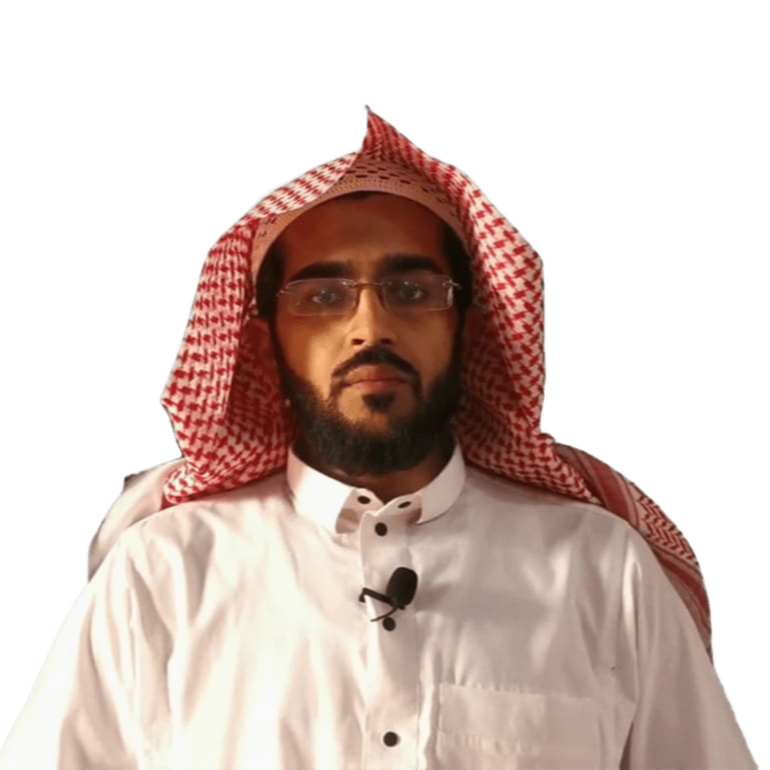
Sheikh Abdul Rahman Yaqoob is a certified Quran & Tajweed scholar, holding a Bachelor’s Degree with Honors in Noble Quran and Islamic Studies from the Islamic University of Madinah. He is the Lead Instructor at Quranic Values, dedicated to bridging the gap for Muslim families in the West by providing authentic Islamic education and nurturing a generation connected to their faith and identity